The Moments Nobody Planned: How to Make Sure Your Wedding's Real Magic Actually Gets Photographed
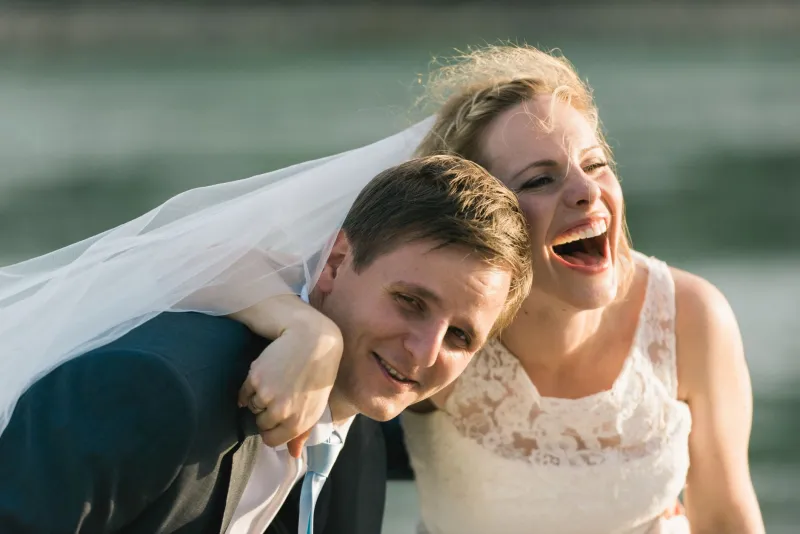
Here's a truth most couples don't realize until they're sitting with their wedding gallery a few weeks later: the photo that makes you cry isn't the one where everyone was perfectly lined up on the steps. It's the one where your dad quietly grabbed your hand right before the doors opened. Or the one where your partner laughed so hard during vows they had to pause. Or the blurry, slightly chaotic shot of your best friends colliding in a group hug the second the ceremony ended.
Those moments? Nobody scheduled them. Nobody posed for them. And if no one was paying attention, they were gone before the shutter even clicked.
Wedding photography has come a long way from the stiff, formal portraits of previous generations. But even with the rise of documentary-style and photojournalist photographers, couples still spend an enormous amount of time focused on the posed stuff — the first look, the family formals, the bridal party lineup — and not nearly enough energy thinking about how to protect the unscripted stuff. Let's fix that.
Why Candid Moments Hit Different
There's a reason photojournalism exists. Real emotion — unguarded, unposed, and completely spontaneous — communicates something that no perfectly lit portrait can fake. When you look at a photo of yourself genuinely laughing, you don't just see the image. You feel what was happening in that moment. You remember the joke, the warmth, the exact way the afternoon light was hitting the tent.
Posed photos serve a real purpose. They document who was there, they give you something polished to frame, and they make your family happy. But candid photos are the ones that tell your actual love story. They're the evidence that your wedding wasn't just a pretty event — it was a real, living, emotional experience.
The problem is that candid moments are, by definition, unpredictable. They happen fast. They don't announce themselves. And on a wedding day, when you're moving from location to location, managing a schedule, and talking to approximately four hundred people, you're not exactly in a position to be your own documentary director.
Start the Conversation With Your Photographer Before the Day
If you want more candid coverage, you have to actually say so — clearly and specifically. Don't assume your photographer knows what matters to you. Every couple is different, and without direction, most photographers default to a mix of posed and candid that may not reflect your priorities.
When you meet with your photographer (ideally well before the wedding), talk through the following:
What moments are you most worried about missing? Think about the parts of the day that are most emotionally loaded for you. Is it the moment your partner sees you for the first time? Your grandmother's reaction during the ceremony? The toast from your college roommate who never gives speeches? Name those moments explicitly and ask your photographer to treat them as priority targets.
How do you feel about being photographed when you don't know it's happening? Some couples love the idea of being caught in a quiet moment together. Others find it uncomfortable. Be honest about this so your photographer can calibrate their approach.
Are you open to a second shooter? If your budget allows, a second photographer dramatically increases your candid coverage. While the primary photographer is shooting the bride walking down the aisle, the second shooter can be positioned to catch the groom's face in real time. Those two images together tell the whole story in a way one photographer simply can't.
What's your timeline flexibility? Candid moments need breathing room. If your schedule is packed wall-to-wall with portraits, cocktail hour obligations, and structured activities, there's no space for anything real to happen organically. Build in some loose time — even just 20 minutes where you and your partner are just being somewhere — and let your photographer work.
Enter the Moment Scout
Here's a strategy that doesn't get talked about nearly enough: designating a trusted person in your circle as an unofficial moment scout for the day.
This doesn't have to be complicated. Pick one friend or family member — someone who knows you both well, who's good at reading a room, and who isn't in the wedding party (so they're not tied up with other responsibilities). Brief them before the wedding on a few key things:
- Who are the people most likely to have emotional reactions? (Parents, grandparents, the childhood best friend who flew in from across the country)
- Are there any moments the photographer might not naturally gravitate toward? (A quiet conversation between your partner and their late grandfather's photo on the memorial table, for example)
- Where will the photographer likely be focused at any given point in the day, and what might be happening just outside that frame?
Your moment scout's job is simple: pay attention, and when something real and beautiful is happening, quietly flag it to your photographer. A gentle heads-up — "hey, those two haven't seen each other in ten years and they're about to reconnect by the bar" — gives your photographer the five-second runway they need to get into position.
This works especially well at receptions, which tend to be sprawling and chaotic in the best way. Your photographer can't be everywhere. But your moment scout can cover a lot of ground.
Give Yourself Permission to Be Unaware of the Camera
One of the most counterproductive things couples do is become hyper-aware of the photographer throughout the day. You start performing instead of experiencing. You smile bigger when you notice the lens pointed at you. You pull back from a natural moment because you're suddenly self-conscious.
The best candid photos happen when you forget the camera exists. That's easier said than done, but a few things help:
Choose a photographer whose personality puts you at ease. If you're tense around them during your engagement session, you'll be tense on your wedding day. Chemistry matters.
Trust the process. Once you've had the conversation about priorities and introduced your moment scout, let it go. You've done your part. Now your job is to actually be present at your own wedding.
Remind yourself that imperfect is real. A slightly blurry photo of a genuine laugh is worth ten sharp, staged smiles. Give yourself permission to stop chasing perfection and start chasing presence.
What You'll Actually Be Glad You Have
Years from now, when you pull up your wedding photos, the ones you'll linger on longest won't be the ones where you were trying to look good. They'll be the ones where you weren't trying at all — where something real was happening and someone happened to be there to catch it.
That's the whole point. Your wedding isn't a photo shoot with a party attached. It's a day full of people who love you, showing up in all their messy, emotional, completely human ways. The best thing you can do is make sure someone's paying attention.
Plan for the posed shots. But protect space for the real ones. That's where your story actually lives.