Count Down to I Do: How to Build a Wedding Planning Roadmap That Actually Works
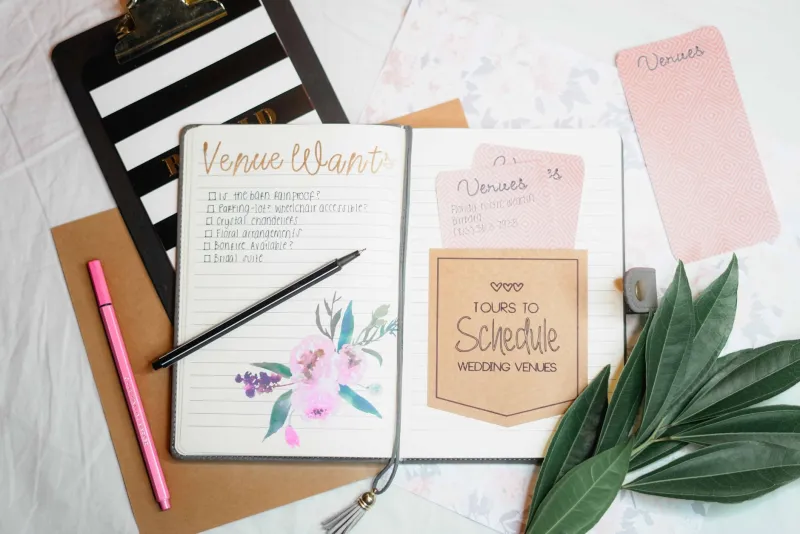
Here's something nobody really warns you about when you get engaged: the wedding planning timeline is not a straight line. It's more like a web of overlapping deadlines, each one quietly dependent on a dozen decisions you haven't made yet. Book the venue before you set the guest count. Set the guest count before you design the invitations. Design the invitations before you finalize the ceremony details. And on and on it goes.
The good news? Once you understand how these pieces connect, the whole thing becomes a lot less overwhelming. The trick is to stop planning forward from your engagement date and start planning backward from your wedding day.
Start With the Date and Work Backwards
Pick your wedding date — or at least a target season — and treat it as your fixed endpoint. Everything else flows from there. A useful rule of thumb: most full-scale weddings in the US require 12 to 18 months of lead time. If you're working with a shorter window, you're not doomed, but you'll need to move faster on a few critical decisions.
Once you have your date, count back the months and start assigning categories to each window. Think of it in four broad phases: the big commitments (12+ months out), the creative decisions (6–9 months out), the logistics (3–6 months out), and the finishing touches (the final 8 weeks). Each phase has its own rhythm, and trying to do phase-three work in phase one is a recipe for wasted energy.
The Big Commitments: 12 to 18 Months Out
This is the phase where you're making decisions that are hard — and expensive — to undo. Your venue is the anchor of everything. It determines your guest count ceiling, your catering options, your décor style, and in many cases your photography backdrop. Popular venues in major US cities like Nashville, Charleston, and Austin are booking 18 months out without blinking. If you've got your eye on something specific, don't wait.
Right behind the venue comes your photographer and videographer. These vendors book fast because there's only one of them available per date. Once you've locked in your venue and date, this should be your very next call.
Also in this phase: setting your overall budget. Not a vague range — an actual number. Your budget is the lens through which every other decision gets made, so getting clear on it early saves you from falling in love with options you can't afford.
The Creative Decisions: 6 to 9 Months Out
This is where the fun stuff starts, but don't let the excitement distract you from the deadlines hiding inside it.
Invitation design is a big one that couples consistently underestimate. Custom stationery — especially anything with letterpress, foil, or hand-calligraphy addressing — can take 8 to 12 weeks from design approval to delivery. If you want your invites in guests' hands 6 to 8 weeks before the wedding (which is standard etiquette for a Saturday wedding, and longer for destination events), you need to start this process no later than 6 months out. That means choosing your stationer, approving proofs, and finalizing your guest list addresses well before most people even think about paper goods.
Your caterer and bar package also live in this window, especially if your venue doesn't provide in-house food and beverage. Tastings, menu customization, and contract negotiations all take time. Same goes for your florist — good ones book up, and if your vision requires specialty blooms or installations, they need lead time to source materials.
This is also when you should be finalizing your wedding party attire. Bridesmaid dresses ordered through bridal boutiques typically need 4 to 6 months for production and alterations. Don't let this one sneak up on you.
The Logistics Phase: 3 to 6 Months Out
This phase is less glamorous but critically important. It's where your wedding goes from a vision board to an actual operational plan.
Send your save-the-dates at the beginning of this window if you haven't already. Finalize your ceremony details — readings, vows, the processional order, any religious or cultural elements that require coordination with an officiant. If you're writing personal vows, give yourself more time than you think you need. Most people underestimate this.
Your wedding website, if you're doing one, should be live and updated with hotel room blocks, transportation logistics, and your registry. Speaking of registries — those should be set up before any engagement parties or bridal showers start happening, ideally in the 9-to-12-month window but definitely by now.
Also in this phase: schedule your hair and makeup trial, book your rehearsal dinner venue, and start coordinating transportation for the wedding day. If you're providing shuttles between hotels and your venue, that logistics conversation needs to happen now.
The Final 8 Weeks: Finishing Touches and Confirmations
This is where a lot of couples feel like they're finally in the home stretch — and in some ways they are. But this window is also where things fall through the cracks if you're not paying attention.
Send your final guest count to your caterer (most require this 2 to 3 weeks before the event). Confirm every vendor — not just a casual check-in, but an actual written confirmation of arrival times, setup windows, and specific deliverables. Create your detailed day-of timeline and share it with your photographer, coordinator, DJ or band, and anyone else who needs to know the schedule.
Do a final walkthrough of your venue. Pick up your dress or suit. Assemble your emergency kit (safety pins, stain remover, pain reliever — you know the drill). Write thank-you notes for your wedding party gifts so they're ready to hand out at the rehearsal dinner.
And somewhere in here, give yourself permission to stop adding things to the list.
The One Thing That Ties It All Together
A planning timeline is only useful if you actually look at it. Put your key deadlines somewhere you'll see them — a shared Google calendar with your partner, a project management app, a physical checklist on the fridge. Whatever works for you. The couples who sail through wedding planning aren't necessarily more organized than everyone else. They've just made their timeline visible and checked in with it regularly.
Your wedding day is one day. The planning is months of small, consistent decisions made in the right order. Get the sequence right, and the rest has a way of falling into place.