Seating Chart Survival Guide: How to Place 150 People Without Starting a War
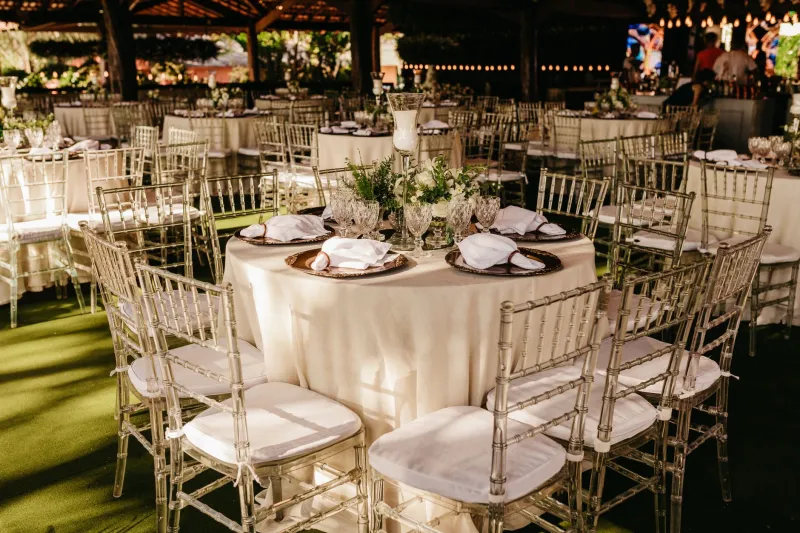
Let's be honest. You didn't get engaged and immediately think, I can't wait to spend three evenings moving color-coded sticky notes around a poster board while my partner and I argue about whether Aunt Denise should sit near the bar or as far from it as possible. And yet, here you are.
The seating chart is one of those wedding tasks that sounds simple right up until the moment you actually try to do it. Suddenly you're navigating decades of family history, managing friend groups that have never met each other, and fielding texts from guests who have very specific opinions about where they'd like to spend their evening. It's a lot. But with the right approach, it doesn't have to feel like defusing a bomb.
Here's how to build a seating arrangement that keeps the peace and keeps the party alive.
Start With the Problem Tables First
Most couples make the mistake of placing their closest people first—the wedding party, immediate family, best friends—and then trying to figure out where the complicated guests go with whatever space is left. Flip that.
Identify your "problem clusters" before you do anything else. These are the groupings that require the most strategic thought: your divorced parents and their new partners, the college friends who had a falling out two years ago, the coworkers who don't know anyone else, the elderly relatives who go to bed at 8:30 and will need to be near the exit.
Once you've sorted those situations, the rest of the chart practically fills itself.
The Anchor Guest Method
Here's a framework that works surprisingly well: for every table, choose one "anchor guest"—someone outgoing, warm, and socially easy—and build the rest of that table around them. Anchors are the people who will naturally carry conversation, make introductions, and keep the energy up even when the DJ is on a break.
You probably already know who your anchors are. They're the ones who make every party better just by showing up. Give each table one of them, and then fill in the surrounding seats with people who might otherwise sit quietly and wait for the night to be over.
This strategy is especially useful when you're mixing friend groups or seating guests who don't know many people. A strong anchor can make a table of strangers feel like old friends by the time the entrées arrive.
Should You Break Up Couples?
This one sparks real debate, but the short answer is: sometimes, yes, and it's not as controversial as you think.
Breaking up couples works best at smaller tables where the goal is genuine conversation rather than just coexistence. When two people already know each other extremely well, they tend to default to each other—which means they talk less to everyone else, which means the table energy drops.
That said, you should never break up couples without giving them a heads-up, especially if they're newer to each other or if one of them is already nervous about not knowing many people. A quick "hey, we put you at different tables so you'd each get to meet some of our other friends—hope that's okay!" text goes a long way toward preventing any hurt feelings.
For long-married couples or close friends who see each other constantly, most will actually appreciate the chance to branch out for a few hours.
Handling Guests Who Want to Dictate Their Seats
At some point, someone is going to reach out and let you know—in varying degrees of subtlety—that they have opinions about where they sit. Maybe it's a parent who wants to be at table one. Maybe it's a bridesmaid who doesn't want to sit near her ex. Maybe it's a family friend who is convinced they deserve a better view of the dance floor.
Here's the diplomatic playbook:
Acknowledge the request without committing. A simple "Thanks so much for letting us know—we're still finalizing everything but we'll keep that in mind" buys you time and doesn't create a promise you might not be able to keep.
Accommodate where you reasonably can. If someone has a legitimate concern—a health issue, a genuine conflict with another guest, a mobility need—take it seriously and adjust accordingly. These are real considerations, not drama.
Hold your ground on the rest. You are not obligated to redesign your entire chart because someone wants a better view or feels they should be seated closer to the couple. Politely let them know you've done your best and that you know they'll have a wonderful time.
One thing to avoid: telling guests where they won't be sitting. It sounds obvious, but a lot of couples accidentally create drama by explaining the reasoning behind their choices. You don't owe anyone an explanation. "We've got you at table seven with some really fun people" is a complete sentence.
The Conversation Chemistry Test
Before you finalize any table, run it through the conversation chemistry test. Ask yourself: if these people were all stuck in an elevator together for twenty minutes, would they find something to talk about?
Shared life stages are a great connector—young couples, new parents, recently retired guests, college-age kids. Shared interests work too, even loosely. You don't need a table full of marathon runners; you just need people who won't immediately run out of things to say.
Avoid tables that are built purely on the logic of "these are the people we had nowhere else to put." Guests can feel that energy, and it makes for a long night.
A Few Quick Rules That Actually Hold Up
- Keep elderly guests away from the speakers. Sounds obvious. Happens constantly.
- Don't seat anyone with their back fully to the ceremony or dance floor unless there's genuinely no other option.
- Give kids' tables a clear sightline to their parents. It reduces anxiety for everyone.
- Put the singles table near the action, not in the corner. Isolating it just makes everyone at it feel like an afterthought.
- Leave a little wiggle room. Someone will cancel last minute. Someone will show up with an unexpected plus-one. A flexible chart is a stress-free chart.
The Final Walkthrough
Once you think you're done, do one last pass through the chart with fresh eyes—or better yet, ask a friend who knows your guest list to review it with you. Sometimes you're too close to the situation to see the obvious collision you've accidentally engineered.
A good seating chart won't guarantee a perfect reception. But a bad one can absolutely derail an otherwise beautiful night. Take the time to do it thoughtfully, trust your instincts about the people you know, and remember: the goal isn't perfection. It's a room full of people who feel comfortable, connected, and ready to celebrate with you.